The steady-minded sage is unshaken by sorrow, free from craving in joy, and beyond attachment, fear, and anger.
— Krishna
❋
Bhagavad Gita · 2.56
Hindi · हिन्दी
दुःखोंकी प्राप्ति होनेपर जिसके मनमें उद्वेग नहीं होता और सुखोंकी प्राप्ति होनेपर जिसके मनमें स्पृहा नहीं होती तथा जो राग, भय और क्रोधसे सर्वथा रहित हो गया है, वह मननशील मनुष्य स्थिरबुद्धि कहा जाता है ॥
The verse in reading order — each Sanskrit word with its meaning beneath. Hover a word to focus on it.
दुःखेषुin sorrowsअनुद्विग्न-मनाःmind not agitatedसुखेषुin pleasuresविगत-स्पृहःfree from cravingवीत-राग-भय-क्रोधःgone beyond attachment, fear, and angerस्थित-धीःsteady-mindedमुनिःsageउच्यतेis called
Read literallyin sorrows · mind not agitated · in pleasures · free from craving · gone beyond attachment, fear, and anger · steady-minded · sage · is called
Understanding the verse
✦
It shifts attention from chasing comfort to building inner steadiness that stays intact under praise, loss, and pressure.
Built onsthitadhiragaspṛha
01
In plain words
What this verse means
A truly steady person stays calm in hardship, does not chase pleasure, and is free from attachment, fear, and anger.
02
On the battlefield
Context & commentary
On the Kurukshetra battlefield, Arjuna has asked what a person of steady understanding looks like. Krishna answers with a portrait of inner balance: the sage is not shaken by pain, does not chase pleasure, and is no longer driven by attachment, fear, or anger.
03
In your life
Why this verse still matters
You get a painful message, then a flattering one, then another setback. Your mood whiplashes with each ping. This verse points to a steadier way: let events pass through without letting them seize the mind.
The takeaway
“You do not have to be ruled by every rise and fall. Calm can remain while life changes.”
A truly steady person stays calm in hardship, does not chase pleasure, and is free from attachment, fear, and anger.
Who speaks Bhagavad Gita 2.56?
Krishna speaks this verse, on the battlefield of Kurukshetra, in the chapter titled "Sankhya Yoga" (The Yoga of Knowledge).
Which chapter of the Bhagavad Gita contains verse 2.56?
Verse 56 sits in Chapter 2 of the Bhagavad Gita — Sankhya Yoga, "The Yoga of Knowledge". The chapter has 72 verses in total.
Why does Bhagavad Gita 2.56 matter today?
You get a painful message, then a flattering one, then another setback. Your mood whiplashes with each ping. This verse points to a steadier way: let events pass through without letting them seize the mind.
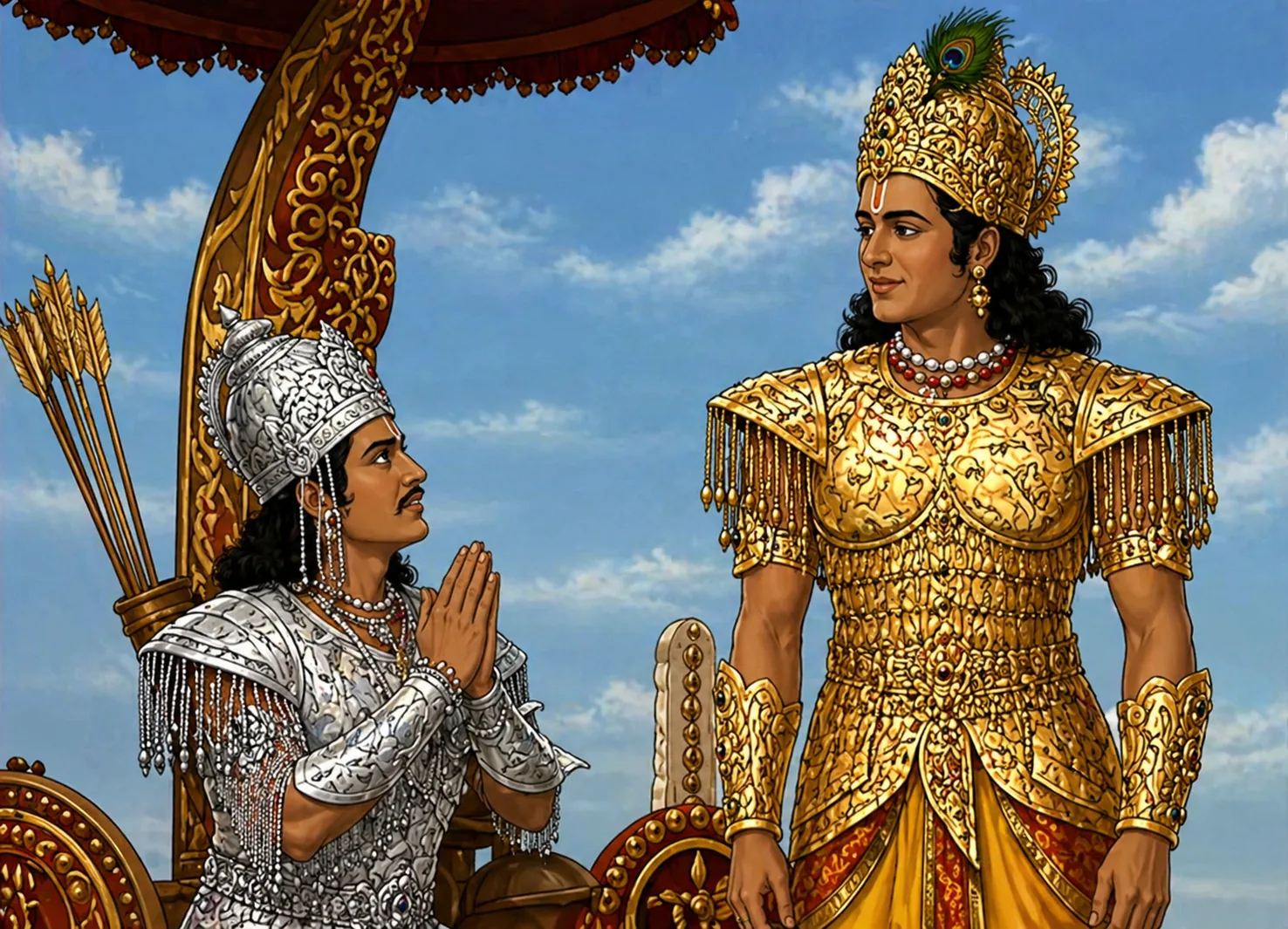

It shifts attention from chasing comfort to building inner steadiness that stays intact under praise, loss, and pressure.
What this verse means
A truly steady person stays calm in hardship, does not chase pleasure, and is free from attachment, fear, and anger.
Context & commentary
On the Kurukshetra battlefield, Arjuna has asked what a person of steady understanding looks like. Krishna answers with a portrait of inner balance: the sage is not shaken by pain, does not chase pleasure, and is no longer driven by attachment, fear, or anger.
Why this verse still matters
You get a painful message, then a flattering one, then another setback. Your mood whiplashes with each ping. This verse points to a steadier way: let events pass through without letting them seize the mind.
“You do not have to be ruled by every rise and fall. Calm can remain while life changes.”
Explore related themes: sattva (26 verses), equanimity (23 verses), attachment (20 verses)