The divine said: When a person gives up all desires that arise in the mind, and is satisfied in the true self by the true self alone, that person is called steady in wisdom.
— Krishna
❋
Bhagavad Gita · 2.55
Hindi · हिन्दी
श्रीभगवान् बोले हे पृथानन्दन जिस कालमें साधक मनोगत सम्पूर्ण कामनाओंका अच्छी तरह त्याग कर देता है और अपनेआपसे अपनेआपमें ही सन्तुष्ट रहता है, उस कालमें वह स्थितप्रज्ञ कहा जाता है ॥
The verse in reading order — each Sanskrit word with its meaning beneath. Hover a word to focus on it.
श्री भगवानुवाचthe divine saidप्रजहातिgives upयदाwhenकामान्desiresसर्वान्allपार्थO Parthaमनोगतान्arising in the mindआत्मनिin the true selfएवindeedआत्मनाby the true selfतुष्टःsatisfiedस्थितप्रज्ञःsteady in wisdomतदाthenउच्यतेis called
Read literallythe divine said · gives up · when · desires · all · O Partha · arising in the mind · in the true self · indeed · by the true self · satisfied · steady in wisdom · then · is called
Understanding the verse
✦
It shifts the mind from chasing satisfaction to recognising contentment as inward and already available.
A person becomes steady in wisdom when all mental desires are released and contentment comes from within, not from outside things.
02
On the battlefield
Context & commentary
On the battlefield of Kurukshetra, Arjuna has asked what a truly steady person looks like. Krishna answers by describing the inner turning point: desire no longer rules the mind, and contentment comes from the true self itself.
03
In your life
Why this verse still matters
You finally get the promotion, the message, the praise — and still feel restless. This verse points to the deeper shift: stop waiting for outside approval to settle you.
The takeaway
“There is relief in not needing anything extra to feel complete.”
Explore related themes: manas(49 verses), kama(23 verses)
Common questions
What does Bhagavad Gita 2.55 mean?
A person becomes steady in wisdom when all mental desires are released and contentment comes from within, not from outside things.
Who speaks Bhagavad Gita 2.55?
Krishna speaks this verse, on the battlefield of Kurukshetra, in the chapter titled "Sankhya Yoga" (The Yoga of Knowledge).
Which chapter of the Bhagavad Gita contains verse 2.55?
Verse 55 sits in Chapter 2 of the Bhagavad Gita — Sankhya Yoga, "The Yoga of Knowledge". The chapter has 72 verses in total.
Why does Bhagavad Gita 2.55 matter today?
You finally get the promotion, the message, the praise — and still feel restless. This verse points to the deeper shift: stop waiting for outside approval to settle you.
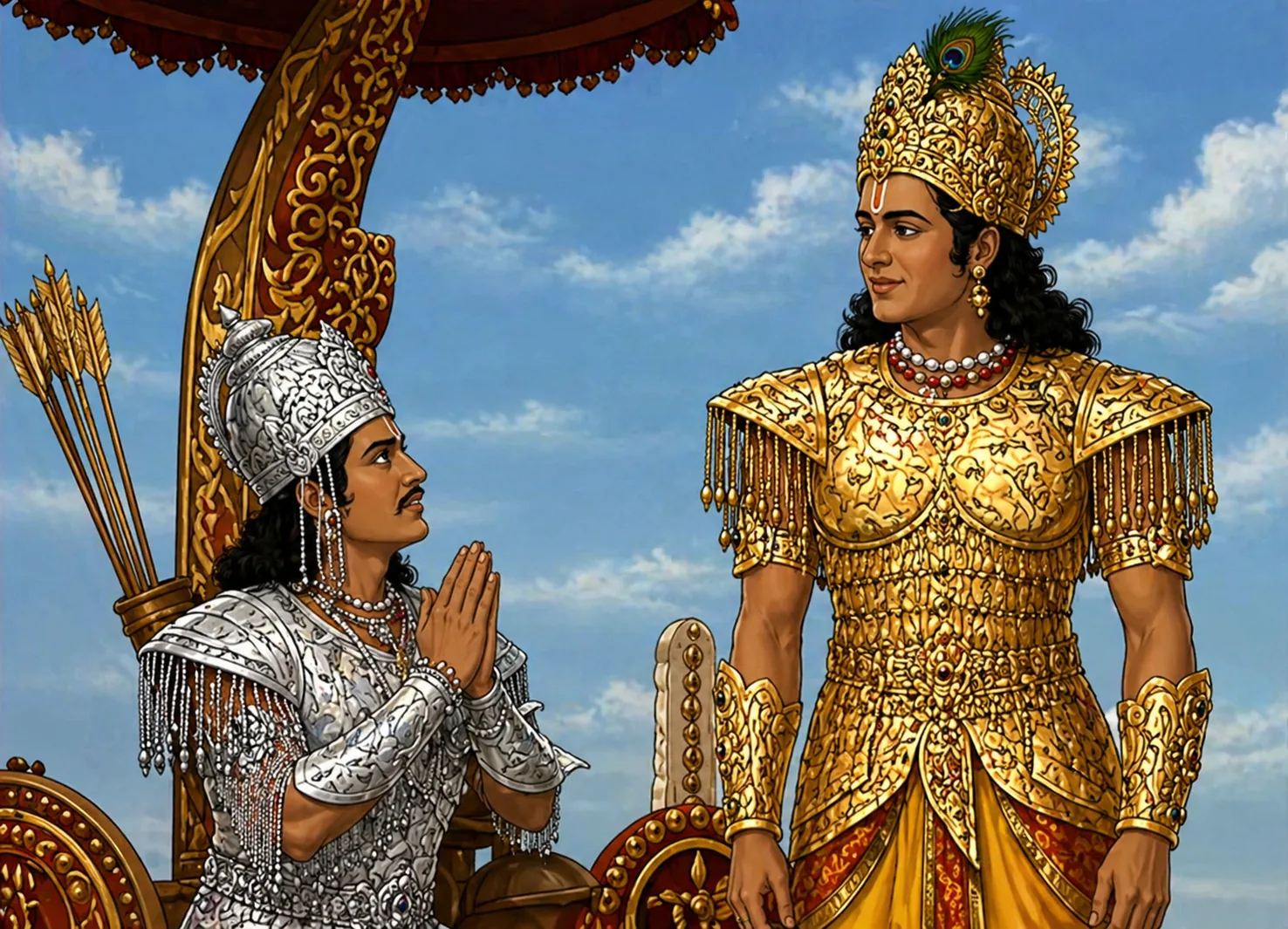
It shifts the mind from chasing satisfaction to recognising contentment as inward and already available.
What this verse means
A person becomes steady in wisdom when all mental desires are released and contentment comes from within, not from outside things.
Context & commentary
On the battlefield of Kurukshetra, Arjuna has asked what a truly steady person looks like. Krishna answers by describing the inner turning point: desire no longer rules the mind, and contentment comes from the true self itself.
Why this verse still matters
You finally get the promotion, the message, the praise — and still feel restless. This verse points to the deeper shift: stop waiting for outside approval to settle you.
“There is relief in not needing anything extra to feel complete.”
Explore related themes: manas (49 verses), kama (23 verses)