Bhakti Yoga
The path of devotion. Of all paths, Krishna says, this one is dearest to him, and most accessible to those who love.
All 20 verses below.
Wisdom translation, edited by Ankur Shukla. Commentary AI-drafted, human-reviewed. Reviewed June 2026. Methodology →
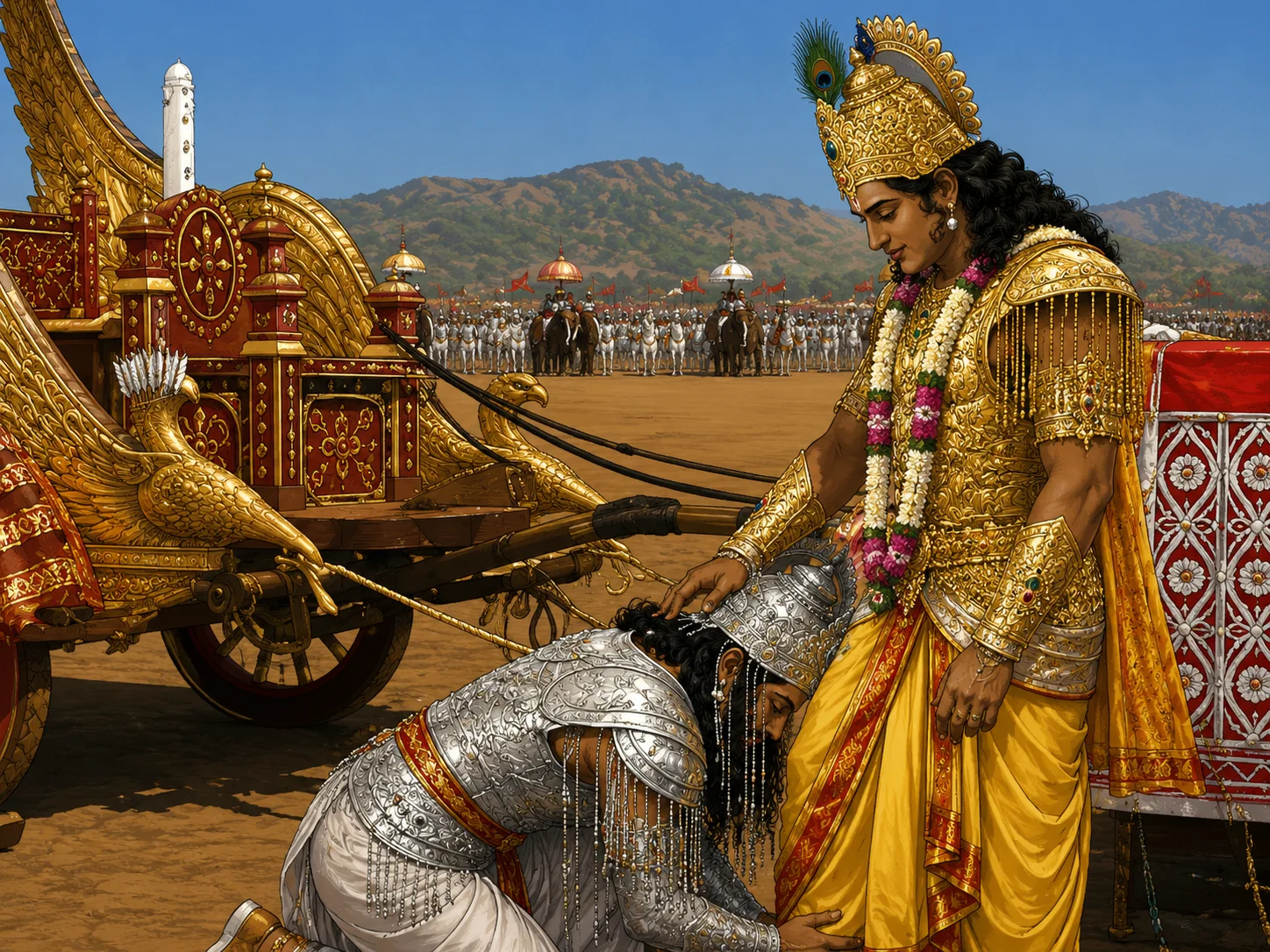
“Devotion can face the divine as form or as formless reality.”
It is honest to ask which form of devotion leads deepest.
Read full verse 12.1 →All verses
- 12.1Ch. 12
Devotion can face the divine as form or as formless reality.
It is honest to ask which form of devotion leads deepest.
- 12.2Ch. 12
Full trust and steady remembrance make devotion complete.
Devotion is not second-rate. Full-hearted remembrance itself becomes the highest form of yoga.
- 12.3Ch. 12
The deepest devotion reaches what never changes.
The mind grows quiet when it stops chasing forms and learns to honor what never changes.
- 12.4Ch. 12
Reach the divine by mastering yourself and caring for everyone.
Devotion becomes lighter when it stops being private and starts including everyone.
- 12.5Ch. 12
The subtlest path is hardest for a body-bound mind.
Not every noble aim is equally easy. Some paths ask for more patience, steadiness, and inner refinement.
- 12.6Ch. 12
Total devotion turns every action into worship.
There is relief in not carrying your actions alone; devotion turns effort into offering.
- 12.7Ch. 12
A mind fixed on Krishna is met by Krishna's saving presence.
Devotion is not abandonment; it is being held when your own strength runs out.
- 12.8Ch. 12
A divided mind settles when both thought and feeling rest in the divine.
Single-pointed devotion quiets inner conflict and gives the heart a place to rest.
- 12.9Ch. 12
Practice can lead the mind where stillness cannot yet go.
You do not need perfect concentration first. Repeated return is enough to begin.
- 12.10Ch. 12
Offered action can succeed where practice still fails.
You are not blocked by weakness; you are invited to offer what you can do.
Did you like this chapter?
- 12.11Ch. 12
Let go of the result; the action itself is the practice.
There is relief in releasing the demand that every action must pay you back.
- 12.12Ch. 12
Peace begins when you stop clinging to what your action produces.
You do not have to earn peace by forcing control; it comes when grasping ends.
- 12.13Ch. 12
Devotion shows up as friendliness, forgiveness, and emotional steadiness.
You can be strong without being hard. Softness, steadiness, and forgiveness are signs of real devotion.
- 12.14Ch. 12
Real devotion is a steady mind already placed beyond itself.
Devotion is not only feeling; it becomes a steady way of living that makes the heart simple and strong.
- 12.15Ch. 12
True devotion leaves no wake of disturbance.
There is deep relief in not needing to react, compete, or defend yourself.
- 12.16Ch. 12
True closeness releases craving, anxiety, and compulsive beginning.
Devotion here feels light, not needy. Love becomes cleaner when grasping and restless starting are gone.
- 12.17Ch. 12
Devotion becomes steady when liking and disliking no longer rule the heart.
There is relief in not having to chase or resist every feeling.
- 12.18Ch. 12
Real devotion stays even when life feels hostile or kind.
You can stay open and calm without needing life to treat you kindly.
- 12.19Ch. 12
Praise and blame lose power over the one who stands steady.
Real devotion looks calm, unshaken, and unneedy.
- 12.20Ch. 12
Faithful practice turns devotion into closeness.
Devotion is not just feeling close; it is living the teaching with trust and steady love.