The one who disturbs no one and is disturbed by no one, and who is free from delight, envy, fear, and agitation, is dear to me.
— Krishna
❋
Bhagavad Gita · 12.15
Hindi · हिन्दी
जिससे किसी प्राणीको उद्वेग नहीं होता और जिसको खुद भी किसी प्राणीसे उद्वेग नहीं होता तथा जो हर्ष, अमर्ष ईर्ष्या, भय और उद्वेगसे रहित है, वह मुझे प्रिय है ॥
The verse in reading order — each Sanskrit word with its meaning beneath. Hover a word to focus on it.
यस्मात्from whomन उद्विजतेdoes not become agitatedलोकःthe worldलोकात्from the worldन उद्विजतेdoes not become agitatedचandयःwhoहर्षdelightअमर्षresentmentभयfearउद्वेगैःwith agitationsमुक्तःfreedयःwhoसःheचandमेto meप्रियःdear
Read literallyfrom whom · does not become agitated · the world · from the world · does not become agitated · and · who · delight · resentment · fear · with agitations · freed · who · he · and · to me · dear
Understanding the verse
✦
It shifts the mind from reactive emotion to settled presence that does not spread agitation.
A beloved devotee does not unsettle others and is not easily unsettled by others. Freedom from excitement, envy, fear, and agitation is part of true devotion.
02
On the battlefield
Context & commentary
Krishna is still answering Arjuna on the battlefield, where every quality is tested under pressure. After describing the devotee as steady, humble, and devoted, he adds one more mark: such a person does not disturb others and is not disturbed by them.
03
In your life
Why this verse still matters
Someone cuts you off in traffic, then flips you off through the window. The old reflex rises fast. This verse points to a steadier way: no inner spike, no need to pass the disturbance onward.
The takeaway
“There is deep relief in not needing to react, compete, or defend yourself.”
Explore related themes: bhakti(69 verses), equanimity(23 verses)
Common questions
What does Bhagavad Gita 12.15 mean?
A beloved devotee does not unsettle others and is not easily unsettled by others. Freedom from excitement, envy, fear, and agitation is part of true devotion.
Who speaks Bhagavad Gita 12.15?
Krishna speaks this verse, on the battlefield of Kurukshetra, in the chapter titled "Bhakti Yoga" (The Yoga of Devotion).
Which chapter of the Bhagavad Gita contains verse 12.15?
Verse 15 sits in Chapter 12 of the Bhagavad Gita — Bhakti Yoga, "The Yoga of Devotion". The chapter has 20 verses in total.
Why does Bhagavad Gita 12.15 matter today?
Someone cuts you off in traffic, then flips you off through the window. The old reflex rises fast. This verse points to a steadier way: no inner spike, no need to pass the disturbance onward.
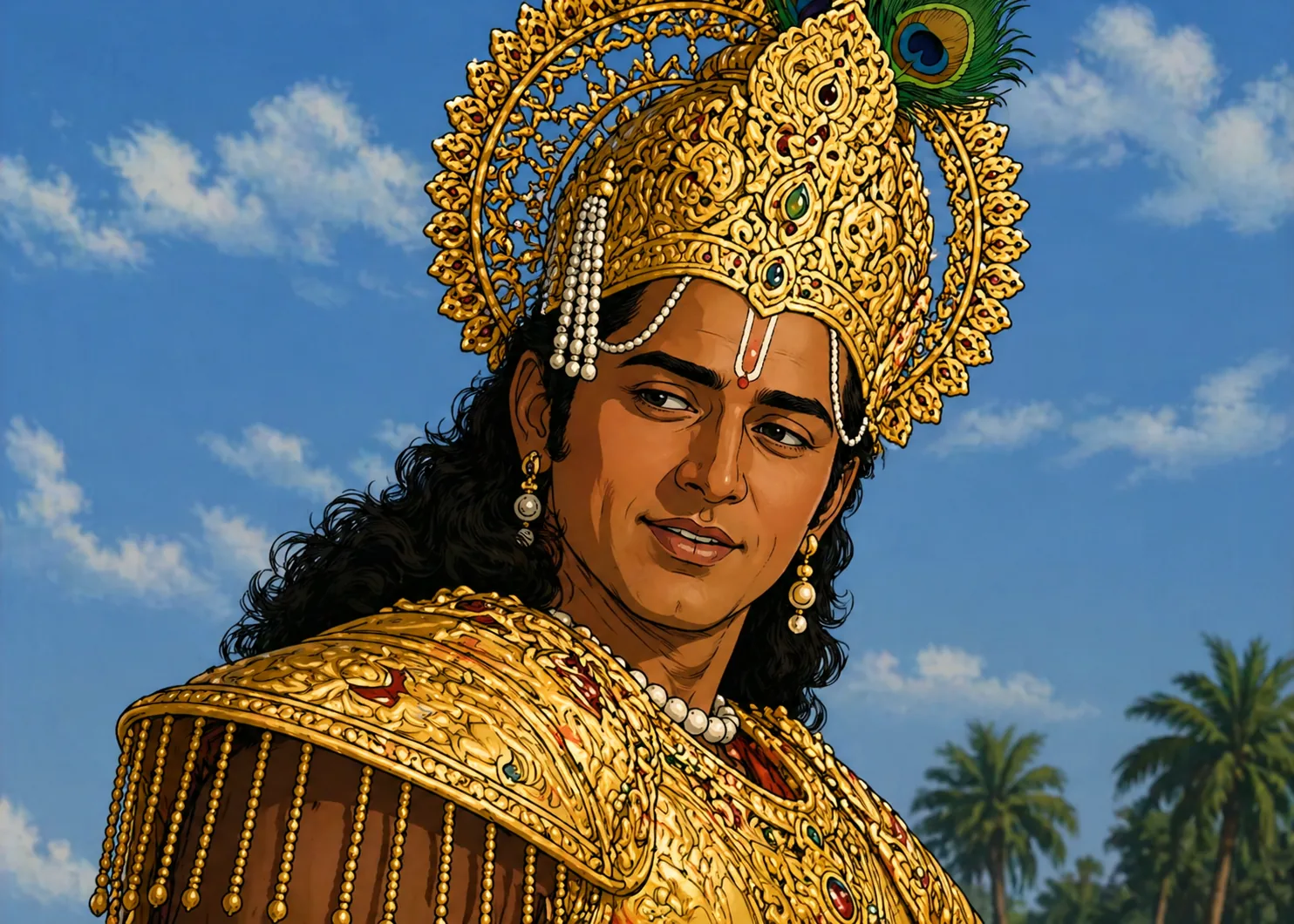
It shifts the mind from reactive emotion to settled presence that does not spread agitation.
What this verse means
A beloved devotee does not unsettle others and is not easily unsettled by others. Freedom from excitement, envy, fear, and agitation is part of true devotion.
Context & commentary
Krishna is still answering Arjuna on the battlefield, where every quality is tested under pressure. After describing the devotee as steady, humble, and devoted, he adds one more mark: such a person does not disturb others and is not disturbed by them.
Why this verse still matters
Someone cuts you off in traffic, then flips you off through the window. The old reflex rises fast. This verse points to a steadier way: no inner spike, no need to pass the disturbance onward.
“There is deep relief in not needing to react, compete, or defend yourself.”
Explore related themes: bhakti (69 verses), equanimity (23 verses)