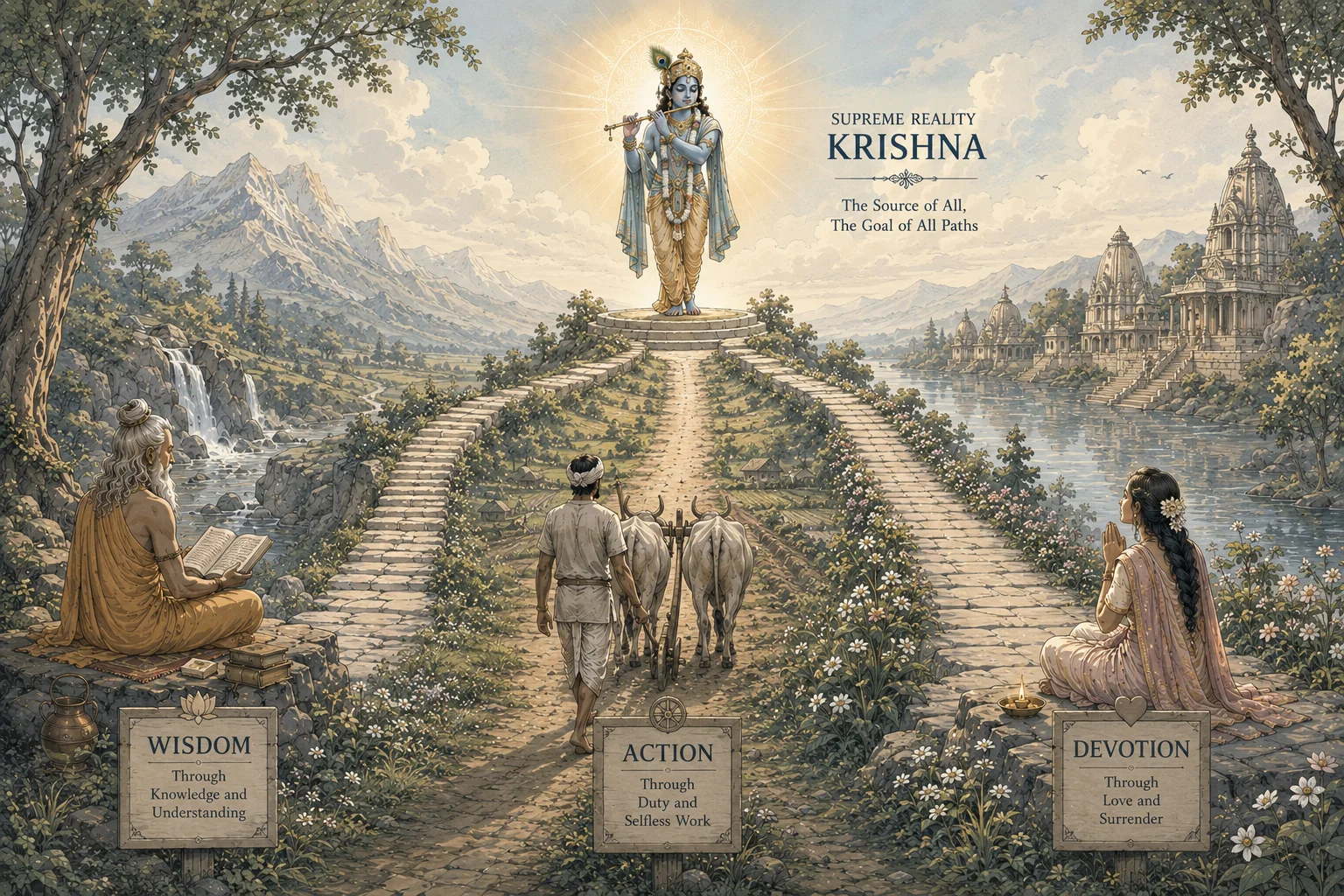
Keep doing what must be done, but do it without clinging to results. That kind of action leads you to the highest good.
02
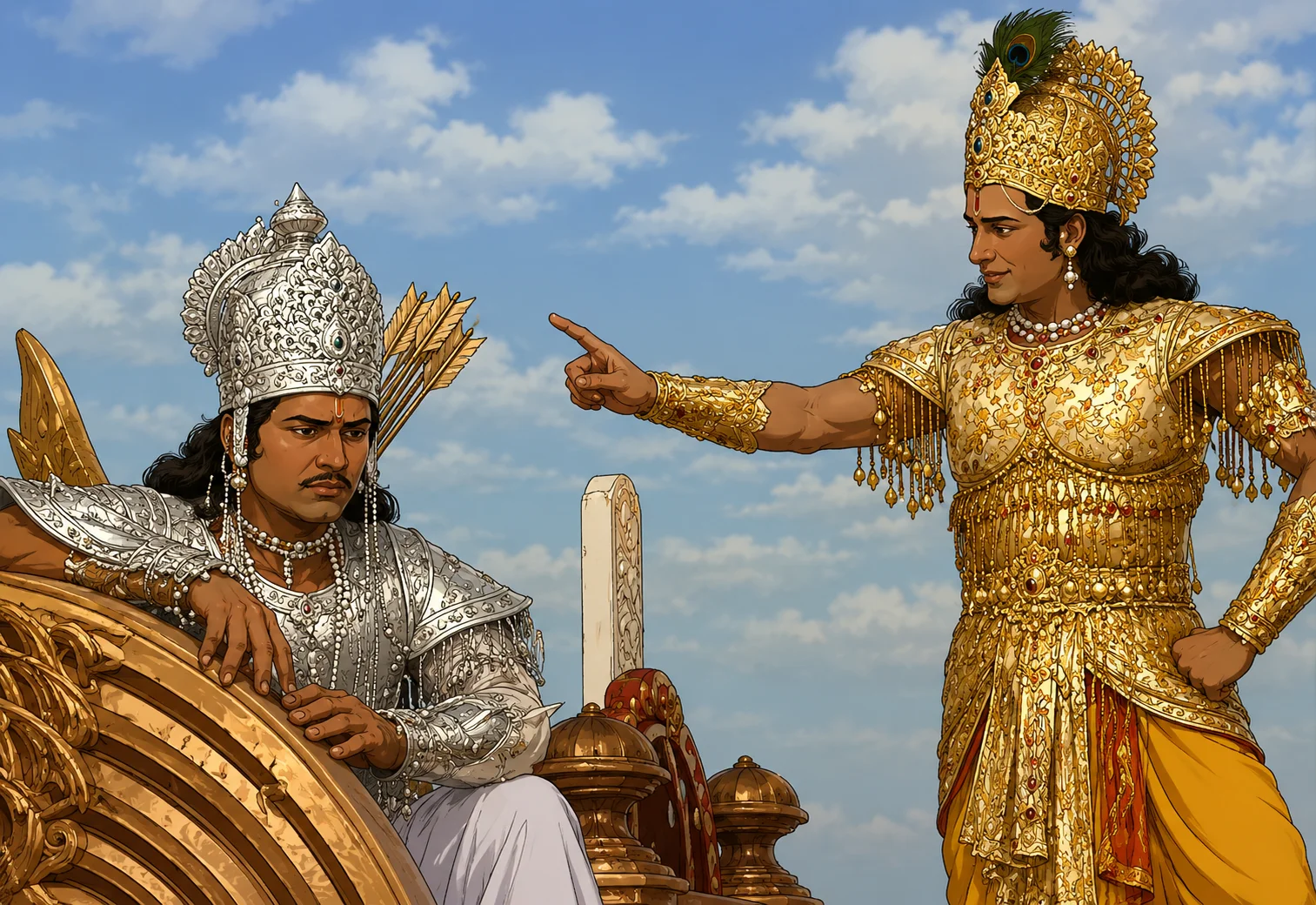
On the battlefield
Context & commentary
On Kurukshetra, Arjuna is frozen between duty and fear. Krishna has just described the person who needs nothing from action. Now he turns that insight into practice: act steadily, but do not cling. That freedom itself becomes the way forward.
03
In your life
Why this verse still matters
You send the message, make the hard apology, or submit the work knowing it may not land how you hope. The act is complete even before the response arrives.
The takeaway
“There is relief in giving your full effort without carrying the weight of outcomes.”
Keep doing what must be done, but do it without clinging to results. That kind of action leads you to the highest good.
Who speaks Bhagavad Gita 3.19?
Krishna speaks this verse, on the battlefield of Kurukshetra, in the chapter titled "Karma Yoga" (The Yoga of Action).
Which chapter of the Bhagavad Gita contains verse 3.19?
Verse 19 sits in Chapter 3 of the Bhagavad Gita — Karma Yoga, "The Yoga of Action". The chapter has 43 verses in total.
Why does Bhagavad Gita 3.19 matter today?
You send the message, make the hard apology, or submit the work knowing it may not land how you hope. The act is complete even before the response arrives.
It shifts attention from owning the result to offering the action cleanly.
What this verse means
Keep doing what must be done, but do it without clinging to results. That kind of action leads you to the highest good.
Context & commentary
On Kurukshetra, Arjuna is frozen between duty and fear. Krishna has just described the person who needs nothing from action. Now he turns that insight into practice: act steadily, but do not cling. That freedom itself becomes the way forward.
Why this verse still matters
You send the message, make the hard apology, or submit the work knowing it may not land how you hope. The act is complete even before the response arrives.
“There is relief in giving your full effort without carrying the weight of outcomes.”
Explore related themes: kurukshetra (95 verses), attachment (20 verses), duty (13 verses)