नैनं छिन्दन्ति शस्त्राणि नैनं दहति पावकः ।
न चैनं क्लेदयन्त्यापो न शोषयति मारुतः ॥
न चैनं क्लेदयन्त्यापो न शोषयति मारुतः ॥
Weapons cannot cut it, fire cannot burn it, water cannot wet it, and wind cannot dry it.
— Krishna
Bhagavad Gita · 2.23
Hindi · हिन्दी
शस्त्र इस शरीरीको काट नहीं सकते, अग्नि इसको जला नहीं सकती, जल इसको गीला नहीं कर सकता और वायु इसको सुखा नहीं सकती ॥
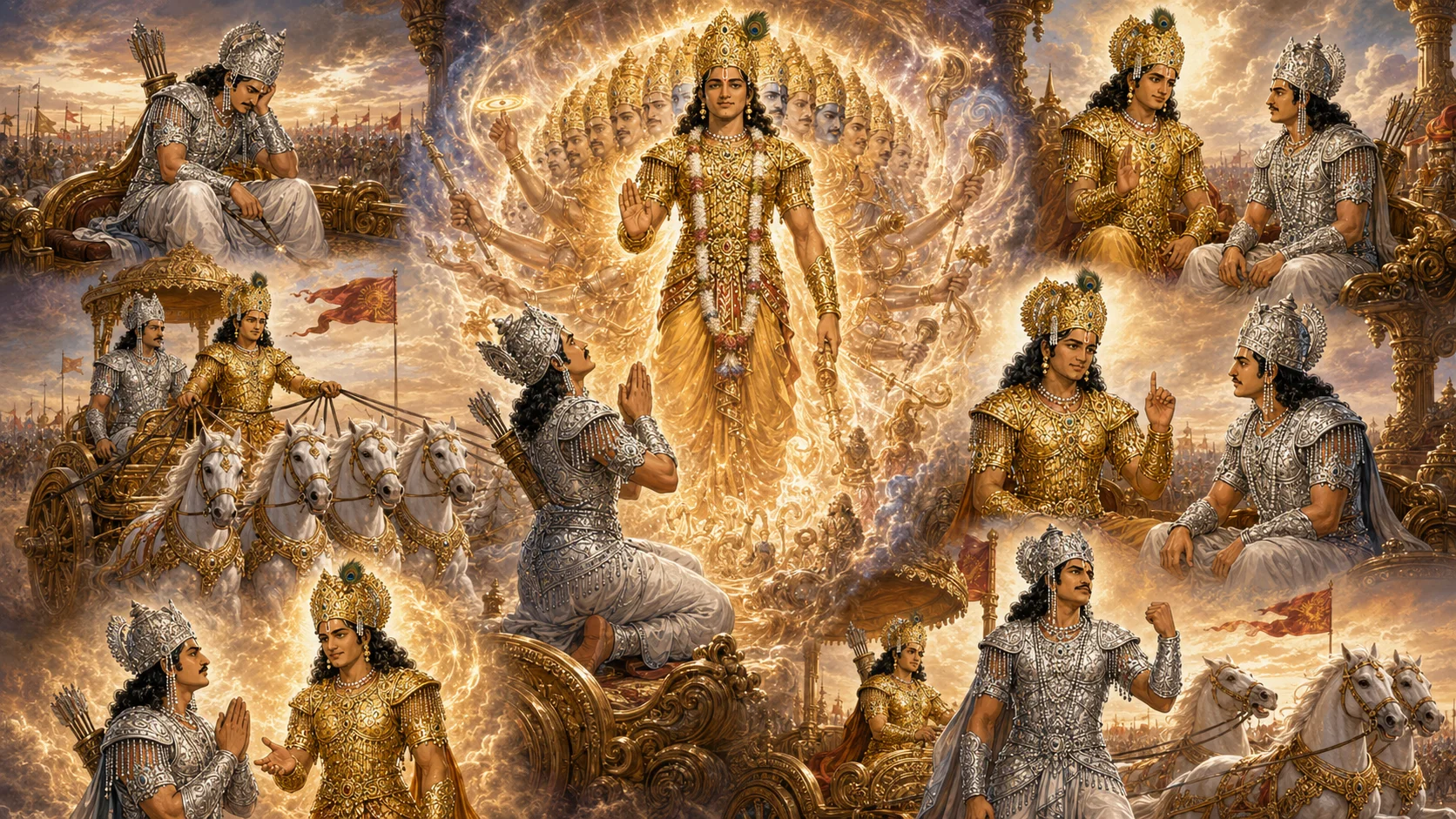
It shifts attention from protecting the body to recognising the untouched witness within.
What this verse means
The true self cannot be harmed by weapons, fire, water, or wind. It is beyond physical destruction.
Context & commentary
On the battlefield of Kurukshetra, Arjuna is frozen before the war begins. Krishna answers his fear by explaining that the inner being is not made of matter at all, so no physical force can destroy it.
Why this verse still matters
You read the message that changes everything after a breakup, a diagnosis, or a dismissal. The body may be shaken, but the deepest part of you is not at the mercy of events.
“Fear loosens when you stop treating the deepest part of you as fragile.”
Explore related themes: kurukshetra (95 verses), atman (12 verses)