Whenever righteous order declines and wrongdoing rises, Krishna says he manifests in the world to restore balance.
02
On the battlefield
Context & commentary
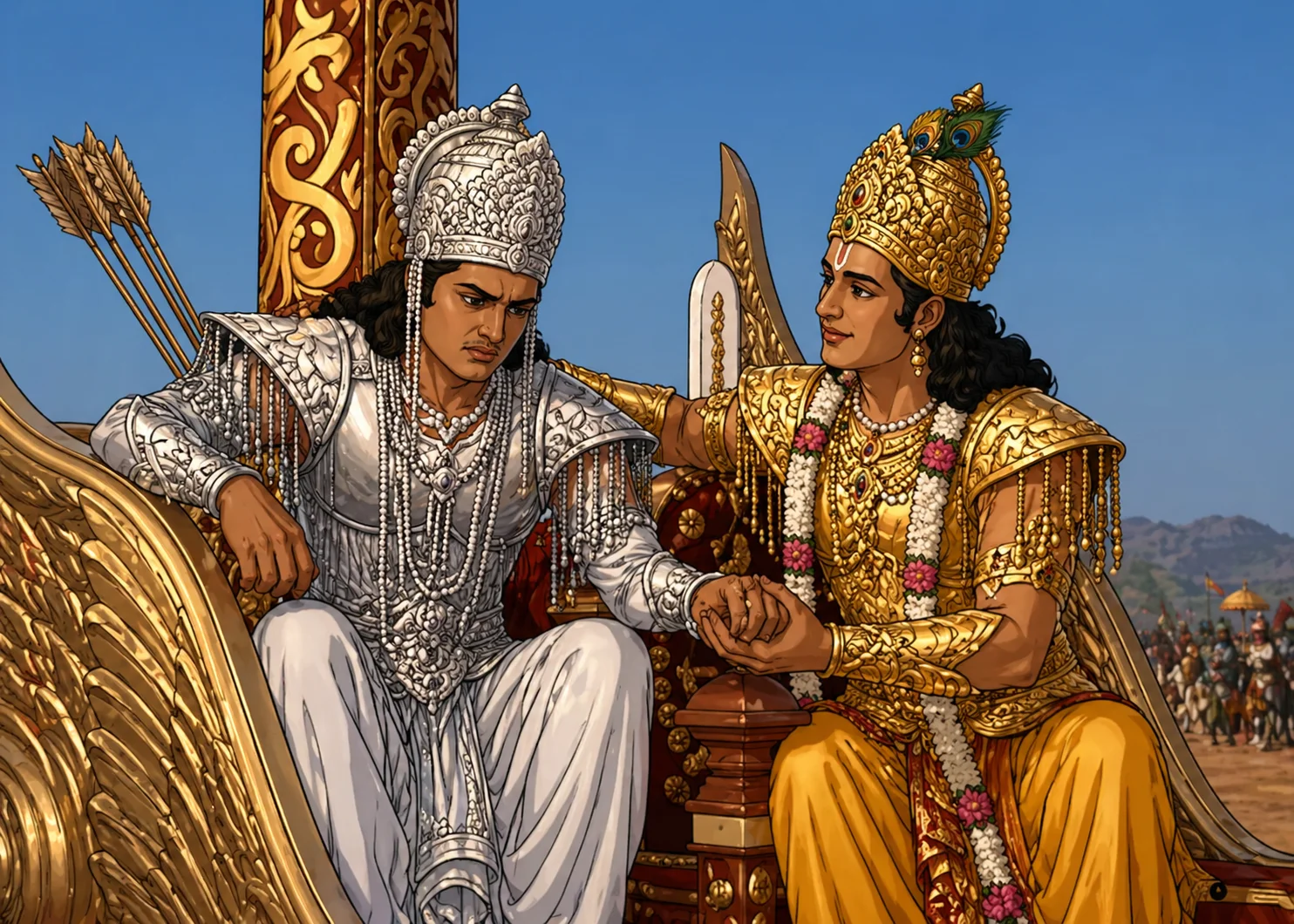
On the battlefield of Kurukshetra, Arjuna is frozen before the war. Krishna has already said he knows all births and is unborn. Now he explains why divine presence enters history: to answer the collapse of dharma and the rise of adharma.
03
In your life
Why this verse still matters
A family, company, or community starts normalizing what once felt unacceptable. The slide feels slow, then sudden. This verse says the turning point is not invisible — the force that restores order is already at work.
The takeaway
“Even in chaos, the world is not abandoned. Help arrives when the balance is most strained.”
Explore related themes: dharma(14 verses), adharma(12 verses)
Common questions
What does Bhagavad Gita 4.7 mean?
Whenever righteous order declines and wrongdoing rises, Krishna says he manifests in the world to restore balance.
Who speaks Bhagavad Gita 4.7?
Krishna speaks this verse, on the battlefield of Kurukshetra, in the chapter titled "Jnana Karma Sanyasa Yoga" (Knowledge and Renunciation of Action).
Which chapter of the Bhagavad Gita contains verse 4.7?
Verse 7 sits in Chapter 4 of the Bhagavad Gita — Jnana Karma Sanyasa Yoga, "Knowledge and Renunciation of Action". The chapter has 42 verses in total.
Why does Bhagavad Gita 4.7 matter today?
A family, company, or community starts normalizing what once felt unacceptable. The slide feels slow, then sudden. This verse says the turning point is not invisible — the force that restores order is already at work.
It shifts the mind from helplessness to confidence that disorder is not the final word.
What this verse means
Whenever righteous order declines and wrongdoing rises, Krishna says he manifests in the world to restore balance.
Context & commentary
On the battlefield of Kurukshetra, Arjuna is frozen before the war. Krishna has already said he knows all births and is unborn. Now he explains why divine presence enters history: to answer the collapse of dharma and the rise of adharma.
Why this verse still matters
A family, company, or community starts normalizing what once felt unacceptable. The slide feels slow, then sudden. This verse says the turning point is not invisible — the force that restores order is already at work.
“Even in chaos, the world is not abandoned. Help arrives when the balance is most strained.”
Explore related themes: dharma (14 verses), adharma (12 verses)