The verse in reading order — each Sanskrit word with its meaning beneath. Hover a word to focus on it.
रजःrajasरागात्मकम्of the nature of passionविद्धिknowतृष्णाcravingसङ्गattachmentसमुद्भवम्born fromतत्thatनिबध्नातिbindsकौन्तेयO son of Kuntiकर्मसङ्गेनthrough attachment to actionदेहिनम्the embodied being
Read literallyrajas · of the nature of passion · know · craving · attachment · born from · that · binds · O son of Kunti · through attachment to action · the embodied being
Understanding the verse
✦
It shifts attention from the task itself to the craving that clings to it.
Restless desire and attachment create rajas. That force traps a person by making them cling to action and its rewards.
02
On the battlefield
Context & commentary
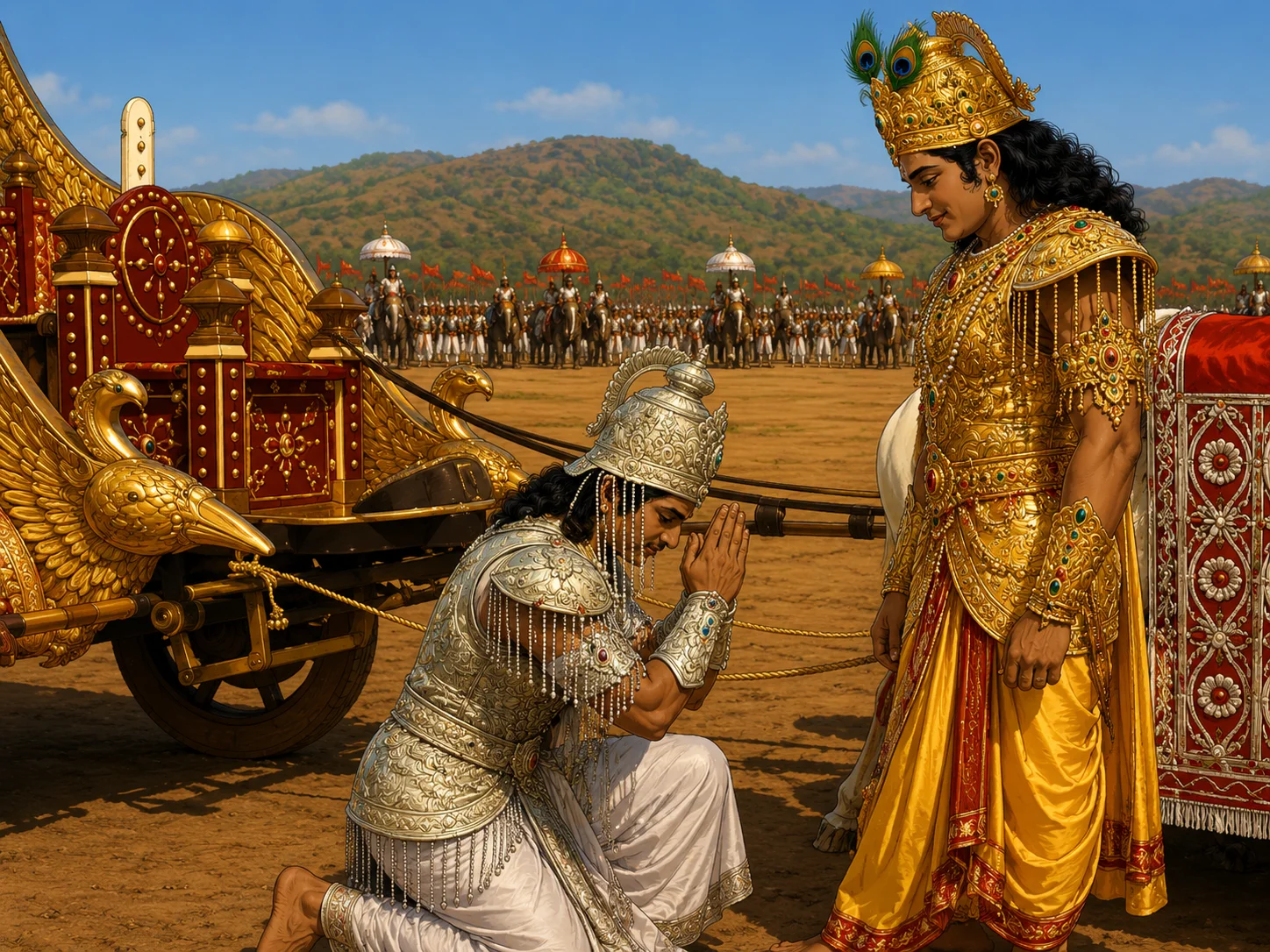
On the battlefield of Kurukshetra, Arjuna still stands frozen while Krishna explains the three forces that shape human conduct. After describing sattva, Krishna now names rajas: the force of craving and attachment that ties the embodied person to restless doing.
03
In your life
Why this verse still matters
You refresh your inbox again, then check the message thread, then the notifications. The urge feels small, but it keeps pulling you back into the same loop.
The takeaway
“You can see how craving quietly turns action into bondage.”
Explore related themes: gunas(47 verses), rajas(21 verses)
Common questions
What does Bhagavad Gita 14.7 mean?
Restless desire and attachment create rajas. That force traps a person by making them cling to action and its rewards.
Who speaks Bhagavad Gita 14.7?
Krishna speaks this verse, on the battlefield of Kurukshetra, in the chapter titled "Gunatraya Vibhaga Yoga" (The Three Modes of Material Nature).
Which chapter of the Bhagavad Gita contains verse 14.7?
Verse 7 sits in Chapter 14 of the Bhagavad Gita — Gunatraya Vibhaga Yoga, "The Three Modes of Material Nature". The chapter has 27 verses in total.
Why does Bhagavad Gita 14.7 matter today?
You refresh your inbox again, then check the message thread, then the notifications. The urge feels small, but it keeps pulling you back into the same loop.
It shifts attention from the task itself to the craving that clings to it.
What this verse means
Restless desire and attachment create rajas. That force traps a person by making them cling to action and its rewards.
Context & commentary
On the battlefield of Kurukshetra, Arjuna still stands frozen while Krishna explains the three forces that shape human conduct. After describing sattva, Krishna now names rajas: the force of craving and attachment that ties the embodied person to restless doing.
Why this verse still matters
You refresh your inbox again, then check the message thread, then the notifications. The urge feels small, but it keeps pulling you back into the same loop.
“You can see how craving quietly turns action into bondage.”
Explore related themes: gunas (47 verses), rajas (21 verses)